If I could save time in a bottle... that would be one heavy bottle.

Thursday, January 03, 2008

God was going 20 mph.

Nat and I were house sitting awhile back when I realized my shoes were at my house. Hopping in the car, expecting to jaunt home and back in plenty of time, I ran into suburban expansion. 30 minutes, 1 1/2 miles, and frazzled nerves later, I arrive at my house.

The reason: 2 elementary schools and 4 school zones. I shook my fist at inconvenience and begged God to let me move deep into the woods. Then I sensed a sweet whisper, "But who will tell all these people I love them?"

All of a sudden, the people who were slowing me up went from being obstructions, to families in need of hope. Instead of noticing traffic, I noticed young people who I could get to know and share with. I knew I couldn't leave. This was my community. I was wrecked.

But real community is messy. When people get into each other's lives, it chafes like cheap toilet paper because I have issues, baggage, hang ups, and "idiosyncrasies." So do you.

Real community is knowing the difference between "one of my moods" and something wrong and loving me through both of them (even when they both happen a lot). It's calling me on my moods, bearing my burden, and letting me bear yours. It's rubbing me the wrong way, and it's saving my life.
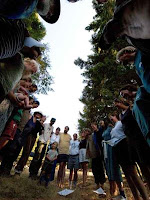
But it's most definitely not just "getting together."

And the greatest petri dish for growing community...

Frequent, spontaneous contact.

The more we're around each other, the more likely we'll become a community. It's not just about affinity when we realize something greater is going on and submit to the process. By having dinner together and shopping together and our kids play together and being willing to be real and commit to caring even when and especially when we disagree or are different... we're nurturing the raw materials of real community.

The challenge for me was to see the people right around me as my community too. It goes from meeting people at church to meeting people in my world. What if God wants me to reach out to the neighbor lady, or the couple across the street? What if He wants me to show her He loves her and that God and church is about imperfect, broken people learning to live and love God and each other inspite of our "idiosyncrasies?"

Lynn McCord asked, "What now?" That's up to you. Here are somethings I'm going to try...

1) Rally with those already around me. Does anyone from your church live near you? 5 couples who attend my church live within 1/2 mile of my house. Let's get together soon and get to know each other better.

2) Slay the dragon of individualism. I really don't need more "me" time. It's really no hassle to have someone to my house for dinner (if they don't expect spic-n-span). It's not the company I pull back from anyway, it's letting them see me and speak into my life when I need it. Point blank: to be who God wants me to be, I need other people. The Marlboro man died ruggedly alone.
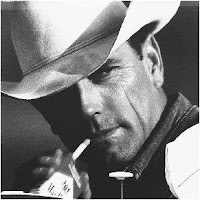

3) Make the best of what's around. I'm going to walk around my neighborhood at least once a week and pray that I see what I need to see. What is that? I don't know. Maybe someone I can talk to. That's out of my comfort zone (see #2 above). But God loves them. I know it, and they may not. Whoever I meet, I'm going to take that as from God and look for ways to build a relationship with them, see what God's doing in their life, and let them see what God's doing in mine.

The key word in my life is PROACTIVE. After 31 years, the world hasn't beat down my door. I guess God wants me to get out and try to make a difference somewhere.

But I'm wearing a smock for when it starts to get messy!

Tuesday, November 20, 2007

Being the Church... and going to one too.


There's a guy I know who moved his whole family to New York for the express purpose of living intentional missional lives. He was a denominational leader in the denomination that my church is a part of, and he tells about how he and his wife just started feeling called to go live in New York city. It's really an amazing story, and you can check out what he's doing here.

In an e-mail exchange, he made reference to "being the church while attending one (sometimes)" and I really liked that. At River City, I'm unapologetically the "small group zealot." It really worked out that I get to go do that every day and get paid for it, because it's what I'd gladly do for nothing (but don't tell my boss). I was far away from God and the church when I discovered community and I realized the power it has - power to destroy if it's focused on something essentially life taking, power to restore if it's focused on something live giving - but power none the less.

The reason I liked his comments about being the church while going to one (which he may or may not have borrowed from George Barna's book Revolution) is because it fundamentally taps into a conviction that I haven't necessarily communicated as well as I wish. The "mechanism" for community at River City Community Church is small groups. The primary way people find their way into a small group is through attending a River City worship gathering or event... I wonder what would change if the direction of those arrows were reversed... what if a primary way people discovered a River City worship gathering was through a small group?

That's what really captures my imagination and makes my palms sweat...

  • There are about 50 Life Groups (intentional discipleship small group) at RCCC.

  • There are about 20 Activity Groups (less frequent, event related gatherings)

  • There are atleast as many Service Groups (ministry specific communities).

  • There are probably close to 700 people in groups at RCCC (guestimate).

  • Each person in each group lives in a neighborhood.

  • Each neighborhood represented is filled with people whose lives are falling apart or are simply wrestling with the reality of insignificance. There are those who are going through divorces, having affairs, abusing their children, and countless other activities that simply fall short of the abundance that God wants to offer.

What if 700 people got freaked out about their neighborhoods? Not the scared, go into isolation type of freaked out, but the standing on a hilltop weeping for the hurts below type of freaked out. What if small groups decided that it was intolerable that the people around them would live without the type of life-giving community while they gathered within ear-shot?

Bill Hybels wrote a book called Holy Discontent. It's not the kind of book that's going to bend your brain, but it is the kind of book that should inspire you to get off the couch and do something. The thing I realized as I read this book is that my Holy Discontent is two-fold, 1)people living in isolation, and 2) people who aren't living in isolation not caring about people who are.

So that's my rant for today. Go check out Jeff & Christina Getz's site, go pick up Barna's book or Hybel's book or better still, find a group of people that you can gather with on a regular basis who will make you better and who will ask you to make them better. When you find those people, pray for God to expand it, then go looking for who He's sending and invite them. When you do that, Church stops being a place and starts being a living breathing life giving thing, infused with the power and life of God Himself. Who could say no to that?

Sunday, July 08, 2007

A River Ran Through It

The urban gave way to the pine forest at a spot called the grotto. In the distance the 10:00 mass echoed through the thickett. Just across the street, invisible from even the nearest edge were laundromat's and coffee shops and liquor stores vying for the time and attention of passers by and drivers through.

The grotto didn't cry out, unless you were listening for the silent spot among the roar. All along the path, the stations of the cross juxtaposed the sorrow and the joy that marked the life of Christ, going all the way back to his Annunciation. It was hard to imagine much sorrow walking through the Grotto.

There is a section there called "The Peace Garden," with a river/brook and several ponds intended to remind visitors of the waters of baptism, the sacred waters that cleanse us and symbolize the hope of forgiveness. So close to a flow like the Colombia River, I also thought of the one out of whom Christ would make flow Rivers of Living Water.

It was one of those moments with the air of eternity. The colors seemed more vivid, the air more crisp, the scents more alive than in other places. I've been lucky enough to encounter a few of those moments. Once when I was 12 in Washington D.C. Another in the Austrian Alps, and then today, sitting on a hewn wooden bench in the Peace Garden.

"...when Peace like a river attendeth my way... it is well with my soul..."

Saturday, July 07, 2007

A rose (city) by any other name...


I flew into Portland yesterday on my expectations, it seems. I have been looking forward to this trip for a long time. In many ways I think it seemed like the payoff for all my years of pining away for the Pacific Northwest. It's almost like the final redemption of the story my life was in before. I don't think I could have handled leaving Portland 8 years ago. For every co-dependent needy reason you can think of, if I had come here and had to leave it would have been devastating.


Don't get me wrong, I'm not looking forward to leaving. I'm a big believer in "place" and "space" and "location" and there have been enough places and spaces and locations that just felt right the first time I encountereed them. I believe some heart places may even be intrinsic, drawing us from the heart even before we've ever been there. When we finally get to those places, it feels like a visit to a place from our early childhood. There almost seem to be memories in places we've never been and a familiarity on streets we've never walked.


I wonder if Heaven will be like that. I wonder if when we get there, it will seem like we've finally come back to the place we always should have been. I think heaven for me is going to be in one of the mountainous places, close to the ocean and pinned behind a mountain range so the moisture doesn't dissipate and the place stays green and temperate year round. I definitely think heaven will be like that.

Monday, July 02, 2007

Bullets don't kill people, puma's kill people. Always watch out for pumas.

There is a point of no-return for my blogging. I go so long without saying anything, that I get locked up trying to say everything that I haven't said since the last post. I'm such a brain-twisted animal, but I know who I am and I sleep good at night, so that's alright.


So here's the readers digest version, bullet pointed for easy reading (I'm in this for you!), of where I've been. Comment as you like, tell me what you think, help me stay on task. When you respond, it keeps me thinking. This is a symbiotic relationship here. You..... complete....... me. I know you're touched.


  • I've been sick for over a week now. Nothing makes you appreciate health like sickness. Today I feel much better, and I think I'm going to stop by Whole Foods or Sun Harvest and check into the all natural supplementation. I've realized a few things... 1) I eat like crap all the time. 2) I NEVER take any sort of vitamin ever, under any circumstances. 3) I don't exercise. Well, I exercise slightly more often than I take vitamins. But only slightly. and 4) I don't go to bed early enough. All of that is a concoction for unhealth. Throw into the mix that I am now 6 months into my three oh's and I'm starting to think that it really may be time to start taking care of this old tent.

  • Natalie and I are going to Portland on Friday. I've never been to the Pacific Northwest, but I've always wanted to. I've got this sneaking suspicion that somewhere up there may just be where my hearts home is. Natalie's worried that I won't come back. I assure here that I'm 74% positive that I'm going to come back to Texas atleast long enough to get all my things. It's funny that I have such a love for a place I've never been before. It's the remnant of the hippie ethic still living and breathing in my soul. Someone I know who used to be in Portland once said, "you can only look at pretty trees for so long." I'm not so sure.

  • Life is good. I've been pretty aware lately of all the really cool things that are in my life. I think I have a tendency to be somewhat pessimistic. Maybe cynical is a better word. I have to admit lately though, I just have this sense that whatever comes, whatever happens, however it all shakes out, I've got it pretty good and I'm really thankful to God for what He's done and given me. I need to live in light of that and make it more of a habit to remember more often. Remembering is a discipline, but it's important. Vital even, to being the right kind of person.

  • Friendships make the world go 'round. Not literally. That's centrifugal force (centripedal? any Physicists out there?). But along with the life is good thing, I realize that I've been given a great hands when it comes to the friends in my life. I don't get to see all of them as often as I should, but I appreciate that there's never a begrudging guilt trip or manipulation game when our paths finally do cross. We just pick up where we left off. My friends challenge me to dream big dreams, have big thoughts, and just generally want to be a big person... but the good kind of big. Not the fat kind of big that I'm increasingly finding a propensity toward. It wasn't always like this. Again, I attribute it to the three oh's.

  • Here's an Interesting Christmas Idea. Go here and see what you think. I learned about it from reading this blog from a guy whose a pastor at the church who started this last year. What do you think? What would the implications be if ten's of thousands of Christians across America undertook a project like this (at the site, click on the "read more" link at the bottom, and that will open up a window which will then have a link to a .pdf file that gives more details and vision)? What would the implications be for YOU if you undertook something like this? Who would understand? Who wouldn't? How would they respond? How does that make you feel?

Overall, things are good. Thanks for being a part of what's going on in my life, even if we've never met and you just stumbled upon this blog for the first time today. I hope you've enjoyed your stay, and I hope you come back again. Find a way to get involved. Make a difference. Be engaged.

Wednesday, May 09, 2007

Beauty close by


Driving to my parents house from the west, you have to drive by this piece of property, probably 100 acres of undeveloped "ranch land." I put the quotes because I've never really seen more than 10 or 15 cows, and most of the property is in a flood plain. I don't know how useable it is for grazing or raising cows or sheep or other livestock, but that 100 acre plot is one of my favorite places in the world.


When my parents built their house in their suburban neighborhood 7 years ago, it was on the growing edge of northeast San Antonio. It was well within the city, accessible to major freeways and all of that, but still separate enough to feel like you weren't in the middle of town. Since then, the area has exploded with shopping centers and gas stations and more track housing than ought to be legal. Except for those 100 acres.


One corner of the property in particular will probably always be one of those memory sweet spots that lives forever in my mind. It's on a gentle rise, so it fills the horizon as you drive past it. Every spring the landscape progresses from blues to yellows to whites with little spots and speckles of reds and orange when the wildflowers bloom in succession. It seems like a piece of Montana, transplanted close by so that I can either stoke my longing for the wilderness or at least continue to believe that I'm a mountain man in my heart.


I'm grateful for the little reminders that even as things drive forward and grow skyward, there is still hope for open spaces and natural beauty. Someday the owner of that property will pass on, and that wonderful piece of property will pass into the hands of someone else. I hope they love it as much as I do. Or I hope that I have enough money to buy 100 acres of woods in the middle of suburban San Antonio.

Tuesday, May 08, 2007

Speaking the Truth in Love: rightness to the core


When Paul tells his Ephesian listeners that it's time to move from spiritual infancy to spiritual adulthood, he challenges them to the highest level of "rightness."

"Instead, speaking the truth in love, we will in all things grow up into him who is the Head, that is, Christ." Ephesians 4:15

By speaking the truth in love, we grow up. By not speaking the truth in love, we don't grow up. It's easy for me to see the truth. I'm just wired that way. I can smell the crap a mile away and cut through it quickly. I struggle with the love part. Not the friendship or the respect, but the kind of love that softens the sharpness of tone that the truth can sometimes wield. The truth hurts because usually the time someone needs to hear truth the most is when they're living blindly oblivious to it.

After our small group tonight I had to have a hard conversation with a couple that I've known for almost 2 years. The guy called the church one day and got me on the phone and we talked for over an hour about the hard times he was facing. He and his fiancee at the time came to our group a few weeks later and they've been faithful ever since. They're married now and have a hard marriage. They both bring baggage from previous marriages and hard life issues, and they have a hard time unpacking it.

Before I went to group, I prayed that God would guide my words tonight. We were talking about the role of men and women in marriage, and the couple's baggage was there in the room again, and I felt like I should address it with them. It was a hard conversation before it ever began. How do you gently reveal blindspots? How do you help someone see something that's glaring to everyone else, but blissfully dark to them?

So we went outside and had the conversation in private. I talked with Natalie afterward and I think that what I said to them was truth.

I'm not sure that what I said to them was said with love.

I believe in hard conversations. I think the Church is weakened when we shy away from helping others see the things that are killing them. But tonight I realized, again, why the love part is so important. Without love, words are clanging cymbals; obnoxious noise and meaningless syllables strung together. My friends may have heard truthful words tonight, but I don't know that those words will ever find their place. Love makes the hard truth land gently, so it grows.

Truth is easy to spot, and pointing it out is a cheap gift. Speaking the truth in love is the measure of maturity because it means that the truth spoken is for the benefit of the other party, not simply for the benefit of being right. On some level, my heart was and is to see my friends have a better marriage than they can imagine. But I fear that the truth destroyed tonight, rather than building up.

Personally, this is a lesson hard learned. I've made this mistake before, even recently to much the same result as this time. Culturally, I think this is a balance that I want the Church to wrestle with more publicly and honestly. Like I said before, I think the Church needs to have the hard conversations with the culture, and I think we need to have the hard conversations with ourselves. But the greatest command is not to tell truth. The greatest command is to love. The lines are blurry, because love expects the best and has an obligation to the loved one to help them realize the best. But I've seen the truth spoken in love, and I've seen the miraculous results it brings.

I hope I have the opportunity to make it up to my friends. I hope I have the opportunity to speak love into their lives. I hope that as they see that love, they hear the truth as well.

Friday, March 30, 2007

It's wet again: When the north moves down and the west moves over


For the time being, while our offices are under construction, my desk is situated next to an ancient looking white bordered window carved into a red wall. My new office won't have an outside window (or any window at all) so I'm soaking in all the sights and sounds I can while I've got it.

My window looks out over the deck of River City's youth building. Surrounded by oaks and laurels and mulch filled beds of greens and colors bordering the asphalt slab filled to capacity on Sunday's by cars and bikes and scuttling feet, my perspective affords me a view of the corner of the patio cover and the trees beyond. On a day like today, when the downpours range from non-existent to torrential I realize how much I enjoy grey days.

I've always thought that I'd love to live in the Pacific Northwest. Several years ago I was within days of moving up to live with several friends who had relocated there. I couldn't scrounge up the airfare/gas money to get there, and soon enough I abandoned the thought. It all worked out perfectly. Had I moved there, I would have missed all the things that have rolled my way since then. I don't think of it as an opportunity lost, I think of it more like a road not taken.

So when the grey days roll down I start to wonder if I could have taken the Northwestern greyness. Whenever a few rain days are strung together I wait to see if the blues roll in. They never do. I just don't mind the rain. Honestly I wish it would rain more often.

Part of me wonders recently if the moments spent looking out the window and thinking of places far away is the rearing up of the wanderer in me. I've never been in a state of homeostasis for this long. It seems I've got restlessness in the deepest parts of me. Maybe it's (relative) youth, maybe it's laziness, or maybe it's something different that defies labels. It just seems that when I sit still for too long, I start to twitch.

So here's to rainy days and being where you are at the present moment. Billy Joel says, "the good ol' days weren't always good and tomorrow ain't as bad as it seems." In between both of the hypothetical yesterday's and tomorrow's is right now. It's all you've got. Make it sweet.

Monday, March 26, 2007

A Toast to Being Poured Out: the optimism of half emptiness


I started reading Augustines Confessions. Mostly because it's a classic and I think there's great value in reading books that have been continually published for 1500 years. As much as I"m intrigued and excited at the prospect of tackling a book like this, I fear that there's part of me that's hoping this will be the silver bullet that slays the dragon of emptiness. But all the while there's this sneaking knowledge that there's no shortcut to true fullness. You can't hurry it. Sometimes when I'm in a hurry to make a bottle for Jackson (usually in the wee hours of the morning) I turn the faucet on full blast and let the water jet into the bottle. Typically what I find when I pull the bottle away is that it's mostly just bubbles, and I have to go back for a second round. The bottle's not full because I didn't let it fill properly.

Those are the little lessons in life that will sneak by if you're not watching for them. I think it's the very process of learning how to slow down and see them that makes fullness happen. I won't be filled instantlyby reading a book, by saying the right prayer, or by doing the good deeds that pop into my head. I can only hope to be filled bit by bit as I learn to take life as it comes. And it comes slowly, and it fills slowly.

The other thing about being filled, is that I'm not starting from empty. I think if I were simply an empty vessel, I'd recognize the little increases and be satisfied. I think more frustrating is the process of unfilling, because that can't be done hastily either. I've got 30 years of habits and reactions to contend with, each one needing to systematically and intentionally unlearned. My frustrations aren't so much that I can't pray for 5 hours at a time or fast for weeks on end, my frustration is that I can't control my temper or manage my money as well as I'd like. The unlearning is the hardest part.

Jesus said that people don't pour new wine into old bottles because the old bottles would break and you'd lose all the wine (He said wineskins, but I don't have any wineskins). You have to get a new bottle for the new wine. This new life that He has for me can't just be superimposed on my old lifestyle. The venerable Chris Coggins used to say "if you do what you've always done, you'll get what you've always got."

So I raise my glass to the process of unlearning. May we enjoy the moments as our empty glasses become full again.

Friday, December 15, 2006

For one or both of us? You be the judge. Or I will. If that's alright with you.

Start. Stop. Start. Stop. Great enthusiasm. Great apathy. Blog after blog after blog. Silence. It's the continuing saga of a would-be writer, I guess. I used to always say that I wanted to write a book. I had a very wise and slightly cynical friend of mine tell me emphatically that I didn't, in fact, want to write a book but rather to have written a book. Good call. It's like playing the guitar or getting in shape. I probably don't really desire to do either of those things, but I sure would like to be on the other end of the process of having done them.

But there's a lot in life that's like that. I don't want to work on my marriage, I want to have a great one. I don't want to feed the dog, but I sure do want the dog to be healthy and active. It's a trade off of sorts, although in the long run, probably not much of one.

It's a well worn cliche that life is a journey and the journey of 1000 miles begins with a single step and if you shoot for nothing you'll eventually hit it and all kinds of other "here and there" sayings that are locked and lost into our psyche. When I used to go see Phish all over the country, the travel was as much a part of the experience as anything. I remember driving across the country to the southern tip of Florida for the millenium. 12 folks in an RV for 10 days. Good times had as we sailed across the southern states taking in the scenes and drinking in the milestones... New Orleans, the mighty Mississip, the everglades... all regal in their splendor, and still only a stop on the way. The destination, had I been beamed from here to there, would have been great, but getting there and getting back are as intricately woven into the fabric of the experience as the experience itself.

Like I said, well worn and much travelled roads talking about the necessity of enjoying the road. But I started thinking about the inconsistency in my blogging. I haven't been motivated by them much. In fact, often times I read the blogs of my well spoken, well thought out friends and wish after wish that I could come up with such wonderful ideas and present them so clearly.

Jealousy is an ugly thing, and a dish best served to someone else.

And at the end of my pity party I came to realize that I've been going about this thing all wrong. The things I like best about the blogs of my friends, even the friends that I haven't met, is that it seems like I know them better through what they write. Their little posts and not so little posts and even their lengthy monologues seem real and authentic, like something out of a Garrison Keilor story where you know the characters and sense their personhood before you know their names or their story. The bloggers I love the best are the ones whose thoughts and words flow out of the core of who they are.

I guess I'm somewhat embarrassed to say that I'm often self-conscious about writing who I am and what I think about things. It just seems that I feel I have to write for someone else. I don't know why I think that, but I do. So I wondered how my voice (my blog voice that is) would sound different if I wrote like no one was ever going to read it. Someone who knows me well mentioned to me one time that if they only knew me through my blog, they would imagine me much differently than I actually am... or atleast they would imagine me much differently than they currently know me. Especially on issues regarding the Church and faith, they said that the "me" that they know from walking around and talking around is much different from the "me" that is sometimes represented.

Perhaps it's the ease of not having to look at someone face to face, or the safety of my laptop screen between the rest of the world and myself, but I find that's often the case. I'm a bold son of a gun on the instant messenger, I promise you that. But it's funny that they said the same thing about the apostle Paul. I've often remarked about how similar he and I are. Then again, not really.

So anyway, by way of the bullet point, a few clarifications that I feel are in order...
  • I love the Church. Seriously, it's the best thing going. I think that too often I spend too much time raising questions about the "establishment" and not enough time celebrating the really good parts about it. For the sake of truthful representation, for every Ted Haggard piece I post, I need to post a piece about the Church being the truly restorative and wonderful thing that it is.
  • I think that globally, per capita, Christians are the most generous, caring, and gracious demographic (so we're just a demographic now?) on the planet. When I think about the AIDS pandemic (it's the right word, but I don't like it. I just had to say that) in Africa, I think (without having any stats) that most of the hospitals and aid comes in one way or another from a Christ-follower with a passion. I think of orphanages, hosptials, engineers, farmers, and a whole host of other functions that Christians fill when they could be doing something else.
  • I think Christians should do better. The hard part about that sentence is that I don't intend it as a comparison. I don't mean "Christians should do better than [insert demographic label here]" because for the most part, I think Christians do better. What I mean, generally speaking, is that there are still hurts, wounds, and tears out there. It's not that we don't do anything, it's that there's still more to do. I begin by looking in the mirror. Honestly, what keeps me from doing more? In one instance, I could do more financially, except that I am afraid that if I give more, I won't have enough for me. Christ said that wouldn't be the case (Matt 6). This is a real conviction for me, and I think that too often I spend time on this conviction without mentioning the first two convictions.

Every faith step I take leads me to another. That's the journey metaphor. If life is a journey, then it doesn't end. When I stop taking steps, then I stop being on a journey and start being at a destination. That's why I say the Church can do more. Bill Hybels often says that the Church is the hope of the world. I couldn't agree more. As far as Christians go, I'm fat and lazy. The only reason I say that is because when I close my eyes and dream, I know that I'm not yet where I should be or even where I could be. When I realize that, I'm not defeated or deflated, I'm motivated. I hear the voice of Father calling me forward again. It's uncomfortable and the more of "me" that I find, the more I realize that I want more of Christ.

So I'm grateful to be a part of something so amazing. It takes my breath away every time I hear about someone taking a first step or another step in faith. It takes my breath away because I can't think of one single time in my life where I've heard someone take a step of faith that cost them something and come back saying it wasn't worth it. Instead, I hear them talk about the abundance they found in their lack, the strength they found in their weakness, and sufficiency of grace.

Father, thank you for your Church. Thank you that you have given me a place. Who am I that you would consider me? Father, let your name find every ounce of glory that it is worth. Let your people move ever onward under your guidance and leadership. Let your Kingdom come, on earth as it is in Heaven. Amen.

Monday, November 06, 2006

Haggard Evangelicals


Another church leader has fallen. Ted Haggard, President of the National Association of Evangelicals, confessed to having sex with a male prostitute and to using methamphetamine while doing it. My thoughts are probably incongruous, sometimes contradictory, and change from minute to minute but here are a few right off the top of my head.

  1. CRAP!! There will undoubtedly be a strong backlash against Haggard, and I think there probably should be. I hate the impending black eye and any rash generalizations that will follow, lumping all "born again's" with Haggard and his association.
  2. Character always leads. I'll bet there was a time when Ted Haggard was an honest, God fearing husband who was doing his best to passionately follow God. There were probably little character issues that he had either dismissed completely or just never took the time to fully crucify. But the pressures of the rise to prominence will tend to squeeze those little character flaws until they become wild fires out of control. A person's character is who he is, so when the person at the top has areas that he hasn't let God touch, those areas will inevitably lead.
  3. Isn't it ironic? Ted Haggard had relations with a male prostitute. I can't think of a group of people in the world who are harsher toward homosexuals than evangelical Christians (at least the public voices of evangelicalism like Pat Robertson, Ted Haggard, et. al. Generally speaking of course). I say ironic, some will say hypocritical. Both are probably right.
  4. Respond like Christ. At this moment, I don't feel very kindly toward Ted Haggard. I feel like he's made the job of advancing the cause of Christ more difficult. But the job of the Church is to be a restorative agent in the world. That means Ted Haggard too. As much as it chides me at this moment, Ted Haggard needs the loving discipline that only the church can offer. I mean discipline in the true biblical sense... not punishment, but training for righteousness. There should be consequences, but we as Christians (evangelical or otherwise) have a responsibility not to crucify Haggard again. If we don't deal with our own propensity toward hate and judgment, we run the risk of landing right where Haggard did. Be careful when you think you stand, lest you fall. We shouldn't defend what he's done, or defend ourselves from public opinion. I think defensiveness has given "us" into a lot of problems. We should quit defending our rights, take up a towel and serve the least of these. Right now that means Ted Haggard. I don't in any way recommend letting him off the hook. I recommend restoration (see 1 Corinthians 5:1-5; 2 Corinthians 2:3-11).
  5. Love Wins. The wake of this story will probably be far and wide. Ted Haggard's actions have relegated him to a notable list of fallen Church leaders with names like Swaggart, Bakker, and King David. But in the end, love wins. We have an opportunity to show the entire world the redemptive power of love. We can love Haggard without condoning what he's done.
  6. Less talk, more action. Personally, I think that as the Church we need to do a lot less talking on the political/public/news junkett scene and a lot more secret loving. 1 Peter 2 reminds us that we are to live such good lives among the people that when they say something bad about us, our lives will be testimonies to Christ's power (paraphrase). Let's not talk so much. Let's not spend so much time telling people what we are for (or more often what we are against) and more time just being for those things.

At the end of this whole thing, I pray that the Church will be moved to silence. They're not listening to what we say, they're watching what we do. We need to apologize and take responsibility for this but then we need to just start doing the things we're supposed to do. Less condemnation, more loving and calling people to follow us to true wholeness in Christ.

Today, I'll cringe a bit if I have to answer the question about whether or not I'm an "evangelical." My response probably won't be much different today than it would have been a few weeks ago, but there will be the looming question in my mind about whether or not I'm being pigeon holed. But such is life as a follower of Jesus. Some will misunderstand and others won't care. But the lesson I hope I take away from this whole thing is that I don't want to defend anyone, least of all myself, with words. I want my life to be an example, so that people who want to pigeon hole evangelicals will have a harder time doing it because of the kind of life I lead. Then I want to boldly and unapologetically call Christians to do the same. We can play a part in making sure nothing like this happens again, if we will ruthlessly deal with those "little" things that become consuming drives, and if we challenge those in our lives (not the general masses, but those who have given me the right to speak into their lives) to live the same way.

I'll be praying for Ted Haggard today. I hope you will too.

Wednesday, October 25, 2006

Moving right along...


I have to be careful. I began my last blog with a physics formula, so I had to do a heart check for self-seriousitis. I knew it first because I'm a language guy not a physicist... and I had to go digging to find the momentum formula. I just wanted to make sure I wasn't posturing.

More than anything I'm wrestling with the "so what" of my monologues on inertia and momentum. Always wrestling with the tendency to live in my own little brain-dom, I occasionally have to come down to earth and figure out what the freak I'm talking about and how it relates to the real world.

I think I'm getting a grip on this one. We have to keep moving. I know that sounds simplistic or boring or whatever... in fact I can hardly believe that's the best I came up with... but I think it's the secret to life. Keep going. But don't just keep moving, keep moving well. Whatever little thing that you feel was a God-honoring thing today, do more of that tomorrow. But don't do it like it's some formulaic "rubbing of the bottle so the geenie shows up," do it because what made you recognize that you had a God moment was God. That means that He found a way to communicate something, and you found a way to pick it up and actually take a step in the right direction.

The implications of that are bigger than I've ever really wrestled with I think. Because if I had wrestled with it, I think I would have much more momentum. I'm still pretty caught up in seeing the grand ME, and attributing most of what happens in the universe in some way to me or mine. George Harrison said, "All I can hear I, Me, Mine..."

But tucked away in a phone call or an encouraging e-mail or a wave to someone in the store is something that's outside of myself beacause it's not about myself. Those moments are the stuff of momentum. Instead I rush off to do my next thing my way and forget to savor the scent of God in the chance meeting or the hand lent to a stranger.

Unfortunately, too many times the idea of momentum in my life comes down to sin management. To be a better Christian I must stop being a sinner. Man. That's a tall order. But what if the mouth speaks out of the overflow of the heart, and what if my heart will be where my treasure is so what if I start giving of what's most important (ME) to someone or something else and watch my heart and my mouth follow? If I start putting some of my valuable time and energy into others, we'll soon see if my life won't follow suit, won't we? What if rather than simply focusing on tearing down the flesh that keeps me from the Spirit, I spend more time trying to build up all those spiritual moments where God rages in me and I sense for a moment the reality of eternity and the opportunity I have to run for it... and the mandate to run well.

The good southern baptist legalist in me want to clarify and say that I'm not being soft on sin (I guess I just did) but right now I don't think I want to say that. My every struggle with sin lets me know that no matter how hard I want to be, I'm soft. Sin beats me too often. So maybe I'm not the guy who needs to fight sin because too often I don't do a very good job of it. Maybe instead I need to spend time and buy lunch for the Guy in me thats bigger than my sin and let Him fight for me.

Momentum is motion. If you can't gain freedom by trying to stop something, then gain freedom through momentum. Go do something. Keep moving. Walk on. Go make a disciple, and try to show them how it's done by doing it yourself. What an expriement that would be, eh?

Tuesday, October 24, 2006

Momentum in Spiritual Formation: The prospect of someday


P = mv

Momentum equals mass times velocity.

Spiritual formation begins with halting my trajectory toward destruction. If following Christ is motion based on my new identity in Christ, we must first stop moving in the direction defined by my old identity in myself. Basically, stop doing the things I have always done. The problem is that at the moment I start following Christ, I've been moving in a direction, and the law of inertia tells me that I'll continue moving in that direction until something stops me. I think recognition of my direction is a major part. When I begin to recognize the thoughts and attitudes that keep me moving in a direction away from Christ, I can begin to halt the spiritual inertia that keeps me from being the raging Christ follower that I so desperately long to be.

So let's assume for a second that I've stopped my spiritual inertia that was leading me toward trouble (big assumption). Simply stopping is no good, because (as I said before) I'm still left among the rubble and ruin that my old life created. Not to mention that I'm still in a state of bad inertia, because I'm simply not moving. Following Christ implies motion, or a new sort of inertia.

So let's further assume that I've begun the journey of following Christ well. I've recognized the faulty thought patterns that have led to faulty behaviors and I'm sputtering down the road toward "the healthy Christian life." (I don't like that phrase, it sounds too trite and canned, but go with me). This is the kind of spiritual inertia frequently referred to as "the camp high." Back from a mission trip or a retreat, and I'm ready to lay down my life for the movement. My life, marriage, family, home, work, and thought life is going to be different. Or is it?

Where the camp high (or any emotional response) leaves us wanting is that it fails to sustain itself. The friction of life and responsibility slows progress until it's first stopped, and then picks up the road where it left off.

This is where momentum comes in. Momentum is what you get when mass is moving in a direction. It's momentum that makes our initial spiritual inertia so difficult to break. The silver lining is that spiritual momentum in a God-ward direction can be equally as difficult to break.

Mass. Size, substance, weight, density... All the components of the substance of what we are. I think of people with spiritual mass as "deep" people. They always have an interesting take on what God is doing. They're unshaken by the circumstances and situations in life. There's a calm about their demeanor, because the weight (rock) they are tethered too isn't easily moved. It's big. It's got mass.

Velocity. Speed in a given direction. Speed is important. Like Ricky Bobby, "I wanna go fast!" Have you ever known someone who always seems to have a fresh insight from God? Speedy spiritualists seem to be hyper-tuned to God around them. They're receptive to God whispers, so they can move fast and seem to be ahead of the curve. Direction may be the key term here. I've known frantic people who are always chasing something, and never chasing the same thing two days in a row. People with spiritual direction know where they're going and they're able to walk toward it most days in an intentional and direct path.

Momentum. It's not enough to simply get started. It's important to get the whole thing moving somewhere worth going. The camp high becomes a spiritual thing to marvel at when it continues beyond the ecstasy of the experience and into the reality of every day. As they move, the substance of what they are picks up speed toward their destination. Spiritual momentum is a beautiful thing, because it looks like a life in order.

The parable of the sower speaks to momentum, and frankly it drives me crazy sometimes. I hate to see the seeds in my life fall on rocky soil or among the thorns. I'm tangled up in life and not able to break free to run forward with all that I am toward a God ready and waiting to receive me. I build momentum when I begin the tedious work of digging out my reservoir. The spiritual disciplines that I love to hate help me find the stillness and silence that I need to recognize God's voice. I gain spiritual girth when I replace the flab of self with the muscle of my identification with Christ. I pick up speed as the decisions and habits become ingrained and instinctive. My direction remains firm as the weight of who I am becoming moves faster and faster.

When it's so difficult to build momentum in ourselves, how do we call those around us to do what we've not done well? I think about my small group. Most of them are relatively fresh in their journey, and they frequenly find great fits of energy squelched by an energy bill that's larger than they expected or a particularly bad day with their kids. We talk of faithfulness and continuing the path toward where they are going, reassuring them that the stuff of life is building a depth and a faith that can sustain them. But what do we put in their hands? What girth can we impart to them to help them carry forward, even if it's simply rumblin' bumblin' stumblin' forward. How do communities of like minded people become transformed by new momentum?

Orginizationally speaking, that's really hard to do. Relationally speaking, there is hope. I have to be willing to lean in and lend whatever measley girth to the process. I'll get dirty when I do that, because many times the problems aren't mine and the journey is one that I specifically and decidedly wouldn't have chosen. The Church is never more alive than at these times. The paradigm that crashes the whole thing to the ground is the framework of individualism. The fact that I see the problems of others as the problems of "others" means that I'll always be limited to whatever weight or velocity I can muster. But the context of lives lived together on purpose pours a heavenly light into the shadows of difficulty that I always wrestle with. Maybe the first inertia I have to set out to break is the movement of individualism. Two is greater than one. In a friendship, the mass is automatically doubled. Momentum builds. And you can't program it. You have to choose it. We as the Church have to go there first, and grab as many others as we can possibly get our mits on. Those are the important decisions, and they are every decision. Spiritual momentum is made up of the mundane and commonplace choices that I make. To bring or not to bring... that is the question

Sunday, October 15, 2006

Inertia and Spiritual formation: What I am is not what I will be


I've been thinking a lot about inertia lately. Inertia says that an object in motion will continue in motion until acted upon by an outside force. Objects at rest will do the same. As a spiritual principle... I'll continue to do what I've always done unless something stops me. I don't have to look very far to see this reality. My habits, thoughts, and reactions are the same as they used to be, and will remain so until something changes them. My defeats come from inertia. Forward motion is only stopped by a greater force in an opposite direction. Faith says that the outside force is God through the Holy Spirit. There is a new motion in Christ. There is not simply new motion - some sort of pauper in prince's clothing thing - I am a new thing all together. But this new thing is bearing old fruit because I forgot to get started in the right direction. There's the same old inertia moving this brand new thing.

Side note: I think that's why mission is such a vital part of spiritual formation. Paul writes that you who have used your hands to steal should use your hands to build. That's redemption. That's opposite inertia.

Side note 2: That's why disciplines work. They are inertia breakers. Silence stops the noise and lets you hear the voices that compel you. Solitude removes the external pressures so that God's internal pressure can move you forward. On and on through the disciplines. They help stop what is steaming ahead and create the surface area in my life for God to stop the motion.

We aren't simply physical beings. We are animated by our souls. Our souls are known as they manifest themselves through our thoughts, which manifest themselves in action (see Dallas Willards Renovation of the Heart for a more thorough discussion of the soul). As our thoughts are altered, so will our lives be altered. The first place inertia must be addressed is in the mind. Be transformed by the renewing of the mind. Let your new life be manifested by a new way of thinking.

As a human, I'm prone to addictions and compulsions of all kinds. I am always looking for new ways to tether myself to something. These are the substances of my intertia... the things that keep me moving in a direction. Consider inertia in such areas as my cynicism. The reason I continue in a cynical frame of mind is because when I see an opportunity to scoff, my mind dwells on it until it becomes as "real" as my hands or feet. What started in my brain finds its fulfillment only after I've given permission to it in my thoughts. I've lingered with the thought because that's what I've always done. Inertia. It's also why the scripture tells us to think on things that are right, pure, noble, and true. Those things are intertia breakers. They're also outside of the scope of my powers. They are totally God. The power in me that is able to break my destructive inertia is the presence of God. God not only stops my forward motion, He erases the tracks in the sand. Where I am is a product of where I've been, but it no longer has to be the trajectory that defines where I am going.

How, then, do I become less cynical (for instance)? Well, first off I have to stop moving in the direction of cynicism. Practically, that means staying away from places, things, and people that reinforce that. It also means not going to the place in me where "the cynic" calls home and makes his base of operations. Don't linger in the place of temptation because the slightest move begins or continues inertia (that's a discussion of momentum... another topic of relevance I think). That stops inertia, but it leaves me in the place I am, and that's no good. Where I am is among the wreckage I've created by going to that place. Reminders are everwhere, and they have already proven big enough to get me moving the wrong way again. So I can't just stop inertia, I must reverse it.

That's when discipleship happens. When I stop following the drives of my old self, I can begin following Christ. Practically that means replacing the parts that drove me to be cynical with the things that drive me to Christ. The foibles of the foolish or requests made with tearful emotional pleas are opportunities for cynicism, but if I replace those with a move to prayer, then I'm on the road to breaking inertia. Over time inertia will begin moving the other way. To continue on and pick up speed in this new direction moves us into the realm of momentum, which is perhaps the next discipleship principle.

As for now, I'm setting about the process of breaking inertia. Thomas Merton prayed, "Justify my soul, O God, but also from your fountains fill my will with Fire. Shine in my mind, although perhaps this means "be darkness to my experience," but occupy my heart with your tremendous life. Let my eyes see nothing in the world but your glory, and let my hands touch nothing that is not for your service. Let my tongue taste no bread that does not strengthen me to praise your great mercy. I will hear your voice and I will hear all harmonies you have created, singing your hymns. Sheeps wool and cotton from the field shall warm me enough that I may live in your service; I will give the rest to your poor. Let me use all things for one sole reason: to find my joy in giving you glory." amen.

Thursday, September 14, 2006

The Pure in heart...


Babies are amazing. My little guy is an education every day of my life. He's a good sleeper, but when he wakes up, he lets us know by doing this little whimper thing. It's not really a cry, but it's definitely not a coo. So he's whimpering to let us know that he's awake and that we need to come peel the diaper off of him and plug him into the bottle so he gets what he needs, but in the middle of all of the angst of babyhood, without breaking the stride and rhythm of his whimper, this huge smile fills all the space between his eyes and his chin. Jackson doesn't just smile, he opens wide to let the joy gush out. It's quite the paradox, the smiling crying baby... but it's regular as clockwork.

Innocence is a beautiful thing. Jackson doesn't get hung up in having to be all one or all the other. The pain and excruciating suffering of sitting in poop with an empty stomach doesn't deter him from expressing the joy of seeing his beloved parents. The whimper lets you know there's still discomfort, but the smile lets you know that there's a perspective that he knows it's all going to be good.I'm an all or nothing kind of guy. When I'm sad... I'm freaking morose. When I'm happy... you can't peel me off the ceiling. Some people call it manic, but we'll let them have their quackish diagnoses. I think there's something to be said for feeling deeply, even if it's feeling deeply sad or deeply pensive or whatever. The only bad part comes when the depth of one feeling is allowed to push out the depth of all other feelings. Why can't sadness and joy coexist? Why can't we see the rainbow on the horizon in the midst of a storm... and why can't we rejoice in it?

The purity of Jackson's heart lets him see the goodness in the midst of whatever struggle or sadness he may be enduring at this particular moment. I think babies inherently see or know God. It's what the image of God looks like before it's marred by social climbing and addiction and fear. In big-people terms, the closest thing I can think of to call it is contentment. Paul said that he could do all things with Christ, and that (maybe most out of context quoted verse in scripture) comes in the midst of talking about being hungry and doing without.I take life too seriously. Or maybe I take myself too seriously. There are serious troubles in this world. There are problems that I can't turn away from, and wouldn't if I could. I love the image of the Kingdom of Light spreading through the darkness. You can't be a Kingdom bearer without looking at the darkness. But neither can you carry the Kingdom if you forget the light. This is where I get caught in cynicism and pessimism. This is where my art and my thoughts and my life start to be lived for other people. If my eye is dark, how great is the darkness within me. But if I can see light in the middle of diaper rash and hunger... then I can see the light everywhere.

Oh, God! What glory there is in your diversity. Father, give me the grace to embrace sadness in the hope of comfort. Help me to embrace darkness with the promise of light. In a world where darkness creeps up from all sides, always threatening to smother hope and faith and love clear my heart of conflicting values and ambitions. Lord let me see you everywhere, and give me the grace to smile. Thank you for reminders of your involvement in our lives. Thank you that you haven't left us alone. Your wrath drives me to your love. Your kindness leads me to repentance. Be glorified Father.

Saturday, September 02, 2006

Art & the Church -or- Intelligent design gone latent

My wife and I always have the conversation about art and music. Typically inspired by the most recent episode of "Making the Band 47: These girls can sweat," one of the caked on girls in short shiny golden shorts says something like, "they just don't let me express my art." To which I snicker and guffaw and say something demeaning about their "art." Natalie chides me for my musical snobbery and closed-minded approach to all things lyrical and melodical.

Aside from the fact that I should generally be kinder and gentler with people on TV, the question is one worth considering... what is art? This has been an evolution in consciousness for me, because for whatever reason, God has given me a heart for the arts. For a long time I considered art... musically speaking... to require something risky or edgy and preferrably created on the spot. I followed Phish around and am still intrinsically moved by the jam band scene. I'm also an extreme jazz novice who can't get enough. I considered these expressions high musical art because of prevalence of the value of creation. At a Phish show, the songs themselves become frameworks for creation. Love it or hate it, the 20 minute "jams" are musical things that are created as you watch and as you listen. That's why a show is so special, because there haven't ever been two of them alike. Sometimes they fail, but sometimes there are moments of transcendence that closely mirror worship (that's another topic for another time).

That led to my first, and broader, definition of what art was. Art was something creative vs. something created (meaning manufactured). That fit nicely with my enjoyment of "the jam" and jazz. But I soon came to realize that there was a lot left out of that. For instance, I love Bob Dylan. I also love Matchbox 20's first 2 albums. More recently I've fallen in love with the music of Anna Nalick. These "pop" musicians defy my first attempt to classify or define art (side note: I realize the absurdity and stupidity of trying to classify something like art. In this sense, I use the words classify and define purely as a means to try and understand why some things definitely seem to be art, and some things definitely don't.). While there was definitely something creative about them, their songs were simple and easy. No modal vamps or tension/release jams.

These artists don't necessarily have improvisation as their hallmark. They are more vocally driven or lyrically driven (in the case of Dylan). That was Natalie's point in the MOTB conversation. A little closer to home, she uses herself as an example. For those who don't know, my wife has a voice like an angel. Seriously, it's one of the most amazing things that I've ever heard, but she doesn't play an instrument and hasn't (yet) written any songs. Which led me to my final (current is a better word) understanding.

For something to be art, it must move you spiritually or emotionally in your soul to a higher place. Art must lift you. It must create a feeling or a mood or an experience. It doesn't necessarily have to make things sunny and easy, but it needs to expand your consciousness in some way and, even if only momentarily, make you see the world differently.

I don't hesitate to call my wife an artist. She moves me when she leads worship. Dylan is an artist because he created his own music, but he tells a story with a conviction (listen to Blood on the Tracks or Blonde on Blonde). He makes you feel something. I listened to Anna Nalick's song "Breathe" literally 50 times in a row, and I could write a post on the deeper meaning of the song. In the case of Making of the Band, the girls had pipes, but there wasn't anything that made me want to live, be, feel, or understand differently. When I hear Matt Singleton talk about hip-hop, I'm hearing a soul that has been challenged by art (for evidence, check this out). Again, the specifics of this are infinitely and eternally open to debate. What moves you and lifts you up is indefinable on global context (maybe), but you get what I'm talking about.

Which brings me to the topic of the Church. Where have all the artists gone? I realize in my last few posts that I've probably been a little bit dogmatic about the Church. I've probably done some finger pointing and wagging, and for that I apologize. I dont' want to leave out names like Dave Crowder, Rob Bell, Erwin McManus, Donald Miller, Kyle Lake, and a whole host of names that I don't yet know but hope to someday stumble upon. But the fact remains, statistically speaking, the Church has largely failed to capture the imagination of the public at large. Could this be due in part to the failure of the Body to produce something so large and beautiful that it has to be wrestled to the ground in sweat and tears, only to be left with a sore hip and a tearful admission that it's bigger than I am.

The saddest part about all of this is that the first glimpse of God we get is of a creative being who is moved by the splendor of His own creation. Isaiah was brought to his knees by the revelation of God. Ezekiel fell to the ground at the mystery of the vision of God. John the Revelator finds himself time and again conveying images of creation caught up in worship at the splendor of its King.

I don't often enough recognize my own failure to be moved by the Artist. So I ask again, where are the artists in the Church? More pointedly, I ask myself, where is the artist in me? Where am I playing my part in channeling the Creator so people will see and be moved, taste and see that He is good. When I listen to Klove, I'm bothered by what's passed off as art. I don't deny that I'm a music snob, not easily impressed. But it burns me to hear another Christian band that sounds just like a cheap knock off of something in the mainstream culture. I honestly think Crowder can be counted among the handful of Christian musical artists. I would put U2 in the same category (digression: I think that U2 has had as much influence in popular music today as anyone in history. The only possible exception I can think of is the Beatles. Possibly.). I think that's why I'm increasingly having to admit my fondness of such Christian hate gatherers as Eminem. While decidedly not Christan, his passion is absolutely contagious. He makes me remember that I'm a being capable of feeling and passion and intensity.

In large part, I guess, this is an indictment of myself. I have failed to capture the essence of creativity that's in me. I had a chance today to write something for use in our weekend services. It may have been the most authentic worship I've offered in a long long time. I just don't do it enough. Those expressions get pushed to the back burner in favor of systems and structures. I don't have any problem with the systems and structures. None at all. Honestly. The fault lies within me. I am the one created in the image of God, and all that I do should bear that likeness. Art isn't confined to painting or singing or dancing. Life is art, because in every moment there is potential to lift and be lifted. To move and be moved. To create and be created again.

For the Church to be what it was intended to be, its life giving Spirit demands that we return to the artistic. God Himself requires that we settle for nothing less than honest expression, in whatever form it takes - from a Bible study class to a poem to an elders meeting - of the biggness of our God.

The Church is waiting for her artists to arise. Let us all come awake.

Thursday, August 31, 2006

Part 5 - What then shall we say?

If one of the major parts of our translation of Christ and faith to a world that doesn't understand is owning it ourselves, what do we do when we don't own it? More precisely, if I have to wait until I have a perfect (or even nearly perfect) practical understanding of grace or salvation or hearing from God or meditation before I say anything about it, then when will any of us ever say anything at all? Partner that question with the reality that we have been commissioned by Christ to go make disciples, and that Paul implies that people can't become disciples unless they hear the truth and we potentially have a real pickle.

So what then shall we say?

I think we'll all be better off if we START by saying that we don't have half the stuff figured out that we think we do. Our first conversation could start with the phrase, "I'm not an expert, but here's what's happened to me..." and then we're sharing what we do know for certain... our experiences, our stories, the hope that we've found in real life situations. When our discussions begin with our stories, at that point we become experts. And not just experts, but experts in the things that really matter. I don't believe anyone is truly converted by arguments. You may change their mind for a short while, but in the long run you have failed to capture their hearts. Jesus didn't woo Peter, Andrew, James, or John with a theological construct for the Kingdom, He captured them with a vision of a bigger catch. You may not like my theology and we may not agree on one single bit of it, but when I sit down and share with you honestly what I've experienced of God in my life, you may not understand it and you may even have a different explanation for it, but it's my story. If you trust me and you believe I'm a person of integrity and sound mind, you will have to wrestle with my story and square it up with the person that you know me to be.

Again, it comes down to the person that I am. I don't expect someone's translation to be perfect. I expect it to be authentic, meaning that I expect it to be honest and born out of a true experience. I don't want to know what you believe about God, I want to know who God is to you. That's translation that can't be argued with. It can be rejected, but it can't be argued with.

So back again to the point of articulating or translating that which we're not experts in (sorry for the digression). I guess the answer is simple. Don't pretend to know more than you know. Offer what you understand, or what you've read, or what you've heard... but don't offer it dogmatically. Because whatever the words you're saying, when you speak without love... you're not translating Christ... no matter the words you say. Say what you know, share your convictions with conviction, challenge, stretch, and face up to people. But remember that the truest translation of what you believe doesn't come out of your mouth. It comes out of your life. Then, when all the discussion is done (or better yet, before it even gets started) go get coffee together or go get a meal together or go hit golf balls together. Before you talk about eternal security or open theism, talk about their family or their job or their bowling score. Then they won't be a dialectical adversary, they will be a real person with a real context and a real story. Then they'll feel the comfort to ask you what sanctification means... and you'll feel comfortable telling them that your'e not really sure. You'll feel comfortable because they're you're friend. And friends can be open and transparent and real with eachother. And that's the truest, realest, most faithful translation of the Godhead that I could imagine.

But don't stop speaking and cop it out to not understanding. Go get understanding. If you don't know God well enough to speak about Him, they by all means find someone who does and stick with them. Not so that you can pick up the lingo, but so that you can be in a place with someone who has experienced Him. When you touch Him and taste Him and feel Him all over you... then you will have something to speak of. When He has met you in your darkness... you will speak of the light with conviction. When He has mended your brokenness... then your discussion of wholeness has authority. But you won't need to wield that authority, because you'll understand both the brokenness and the wholeness... and your life will have found perfect and complete redemption. Then the Kingdom will be within you.

So here's to long conversations and faithful interpretations in life. May your life speak more loudly and more clearly than any words you ever utter. May your speech and your life point faithfully and truly at the One you hope to find. May your steps be your own, and may they tread new ground. May your risks pay off... if not always in success, in a great story eagerly shared. May the circle of ones you love be forever expanding. May the Lord bless you and keep you. May He make His face to shine upon you. Feel the Love

Wednesday, August 30, 2006

Part 4 - Your actions are speaking so loudly, I can't hear what you're saying

Translation means making sense of words that I understand for others who don't understand. Generally we speak of translation as going from one language to another. In learning to "speak" Christian to a world that doesn't understand it, the highest principle of translation is pointing to Christ and giving our words a context that makes their meaning totally understandable.

The problem is that I know not of what I speak.

Honestly, "Christianese" has become such a part of our Christian subculture that when we talk about grace, forgiveness, hearing the Lord, salvation, holiness... we're talking about what we don't really understand. By "really understand" I mean practically understand. That's why we don't make much sense to the world around us. We're talking about things we don't know.

I'm a language guy. If I were to go sit in a doctoral level math class of some sort, I would be able to take notes and pick up some words. I could probably then go to a dictionary somewhere and find definitions of those words and know their meanings. But it would take about 11 seconds in conversation for someone to realize that I don't know what in the world I'm talking about.

That's where we as Christians lose our credibility. Have you ever been in a conversation with someone who is trying to use words they don't really know? They'll toss in a nice $5 word, but they use it in an awkward way? Or when you talk to someone about baseball and they say something that let's you know they're really stretching? What's your first thought? You may not write them off or dismiss them totally, but you certainly wonder why it is that they're going out on a limb to sound like they know what they obviously don't.

There's no greater thing that needs faithful translation that issues of faith. There are no more important words that we could convey than grace, community, salvation, hope. The problem is that we've talked and even shouted these words with such reckless fury without making sure that we know what we're talking about. If we want to be faithful translators of grace... we must first be people of grace.

But none of that will become possible until I'm willing to first own up to the fact that there's a disconnect in what I say and what I am. Until my life is integrated, and salvation means that I've truly been saved from the things that are killing me, when I talk about it to someone else, they won't get it. The stories of people who have tried God and found Him wanting is an indictment not on God, but on my failure to embrace Him fully. I quote Galatians 2:20 about being crucified with Christ before going to the cross. So those outside the Church misunderstand what God asks of us.

We gather in communities which are scripturally mandated to bear one anothers burdens, and we divide along understandings of gifts and inspiration and the fate of those whose lives fail to bear fruit, and we point at the other camps and call them wrong. Then we "witness" to people about God's desire to bring them into families and place them in community when they see our communities as weekday programs where we gather with people who dress the same and talk the same and make the same income as we do. We talk about the mission in the context of weekend trips that make us feel like we've played our part in the game, but we don't turn off our phones so that we don't miss the opportunity to take another step on the ladder ever upward.

I'm also always aware of the plank in my own eye. It's funny that my job... and by that I mean my source of income... is to build communities for the sake of spiritual formation. Yet I am feeling the pangs of brokenness because I know not of what I speak.

I think I need to stop talking about translating for a minute... and starting understanding the things that I'm hoping to convey. Maybe then I won't have to say anything. I believe in the Church. More precisely, I believe in the Spirit which quickens the Church. I don't hope for perfection in the Body, because then I couldn't be a part of it. But I do hope for integrity. I hope for the gentle gradual clensing of the cultural muck and grime that I've picked up as part of a global organization that's sometimes political and sometimes ethical but always portraying something about the God that's called me out of where I was and into something beautiful.

My mandate to translate is as strong today as it was on the day that God captured me. But it has to begin by embodying the message that won my heart. On the day that God woke me up, I didn't need to hear about Grace. I was in the middle of it. May my translation begin by first taking up the towel and washing the feet of those around me.

Chapter 5 - Then should we be silent?

Thursday, August 24, 2006

Part 3 -

What do we do when two different people come to the table with conflicting translations of the same idea or word? Is there an objective test to determine which translation is the best available?

First of all, the word "objective" is a bit scary, especially when it's dealing with language. Language is an art. It's not easily quantifiable. It's fluid, in motion, changing, dancing, evolving. That's why Shakespeare can be such a daunting task... the words he said aren't the words we would say.

So when it comes to defining words and ideas for the purpose of translation there's no getting around the dilemma of occasionally deciding between two or more conflicting and even contradictory definitions or responses to a certain word or idea. So how do we choose?

...Thus, by their fruit you will recognize them... Matthew 7:20

Jesus equates the legitimacy of false prophet's message with fruit, saying that a good tree can't bear bad fruit and vice versa. For purposes of translation, the measure of a words worth, relevance, importance should be the fruit that the idea or concept will bear when applied. When talking about words or ideas that relate to God the translation that produces the best fruit (result, situation) for the greatest number of people for the greatest amount of time should be accepted as the best translation for a word or idea.

Therefore the greatest definition of grace is not the definition which allows me the freedom to chose my own destruction through my actions, but the definition which takes into consideration the self-destructive choices that I make, and turns those choices into positive results... or good fruit.

The words that we use have immediate implications for every life because before they ever have the opportunity to be translated, they must first be rooted in something "real." If we LIVE a definition that falls short of Christ, we portray a broken and faulty image of the one we follow. The consequence for those outside the church are dire, but the consequences for we who hold those definitions are possibly more dire, because we will face the charge of not being good stewards of what we have been given... a faithful portrayal of Truth in the person of Christ and a Divine Helper in the Holy Spirit.

The point is... what we say matters very much, especially in matters of faith and practice.

As the Church we have been entrusted with the Hope of the world. We have been given the keys to the Kingdom, and we have a resonsibility and a charge to take those keys an unlock every door that stands in the way of people getting to Christ. Paul asks the question, "how will they believe if they do not hear?" The rhetorical answer is that they won't. We're always saying something and what we are saying affects what people are believing. We're always communicating. We believe something about Christ and grace and truth and life, and what we believe is manifested every day of our lives. Christ came and translated God for us in images and stories that fit His time and His culture. His goal was to make God accessible to us. If He didn't speak the language of the people He was trying to reach, His mission would have been a failure. But His message wasn't limited to the words, "greater love has no man than laying his life down for his friends," His message was the fulfillment of that love. In a sense, the words He said were signposts so we would recognize the God He was trying to show us.

I've taken a long time to say that it doesn't matter if we have the most dictionary faithful verbal definition of Christ and the Church and matters of faith if our lives are devoid of the context to process them. The important work of translating what we say (salvation, grace, hope, sanctification, prayer, etc.) is meaningless futility if we don't live the Truth at a level beyond what we say. It must first be in us, before it will ever be intelligible coming from us.

So what are the words that you say that don't have meaning or context in your life, and what translation does that give for the passers by in your life?

Part 4 - Culturally speaking...

Saturday, August 19, 2006

Part 2 - Flesh Speaks

Language is a great tool to help us share the things that mean something to us. Words give us the freedom to express life, love, hope, and myriad other emotions and experiences that fill our lives.

But language isn't perfect. It comes up short. The crazy thing is that it comes up short in different places for different people. Take for instance the word "stewardship." It's not an uncommon word. I'd guess that a good number of high school seniors would have atleast heard the word before. But you may not have the same understanding of "stewardship" that I have. The first time I heard the word, it was related to a fund raising campaign to build a church. Stuffy men we knew from church wanted to help us be good stewards of the money God had given us by helping them to build a fancy new building and parking lot. Never mind the fact that my father had been out of work for a year and we were... struggling. So my first taste of stewardship wasn't a tasty one.

And each of us could tell a story like that whether in the church or out of it, words get mis-shapen and misused and all along the way, beautiful ideas and thoughts crumple and wrinkle from misuse.

That's a sad thing, simply for language sake. But when we're talking about eternal things, it's even more sad because those things really matter.

Grace
Peace
Hope
Love

Each of those words means something, and they probably mean something different to you than they do to me. Atleast in their shades of meaning. These words have eternal implications, so how do I handle them? How can I talk about grace to you if you have no context, no understanding, maybe even no real exposure to the idea of grace as I understand it.

...And the word became fl esh, and dwelt among us... John 1:14

It's important, I thnk, to understand that all ideas and concepts originate with God. I believe that everything has its beginning and finds its fulfillment in God, so Grace & Peace and all the others are His ideas. Even words like hate, darkness, prejudice, and despair are ultimately defined by God or His absence in a place. In order for any of us to even have a hope of getting it, we had to get it from him.

You think it's tough to communicate with someone from a foreign country... try communicating from the divine to the fallen. But God, in His wisdom and love found a way to communicate... to translate if you will, what He was (Grace, Love, Truth, Purity). He put on flesh and moved into the neighborhood (John 1:14 Msg).

Scriptures talk about Christ... image of the invisible God, the exact representation of His being... so many other things that point us to the fact that who Christ was is crucial to our understanding who God is. Christ is the translation.

I think the important thing for me now is that the best way for me to communicate grace to someone who may not understand it... or may think they understand it, but understand differently from me... is to live it. To give it flesh and dwell in places where it can be reckoned with.

That's where the Church has lost a lot of credibility. We talked about love and the poor, but we didn't do anything. Let us first be gracious, then preach grace. Let us first be forgiving, then preach forgiveness. Let us first live with the hope of forever, then talk about hope. Most of all, let us first hunger and thirst after righteousness... then and only then will our lives cause others to hunger and thirst as well.

I'm still wrestling with this idea of translation. So far I think 1) it's not enough to say words to people who may not understand or have any idea what I'm talking about. That's not polite, and it's most certainly not effective. 2) A concept modeled is a concept translated... partly.

Which raises the question... probably for Part 3... if a concept modeled is a concept translated, what happens when two different people act two different ways and both call it the same thing... which is right? Which one has the better translation?

About Me

My photo
As the self-proclaimed and happy-to-meet-you Small Group zealot at River City Community Church, my hope is that this page will make you laugh, learn, grow, smile, and most of all cherish the role you’ve been given to play in the Family. I believe Small Group leadership is the most strategic role in the local Church.